


A diagnostic charge surprises people who expect a plug-in tool to simply name the broken part. The honest explanation is that a fault code describes a symptom, not a culprit.
What a fault code is, and is not
When a control module sees a reading outside the range it expects, it stores a code. That code records what the module noticed — a circuit reading low, a mixture running lean, a sensor disagreeing with another sensor. It does not record why.
Take a stored code for a lean running mixture. The honest list of possible causes includes an air leak after the mass airflow sensor, a tired airflow sensor, a weak fuel pump, a partially blocked injector, an exhaust leak upstream of the oxygen sensor, or a faulty oxygen sensor reporting a problem that is not there. Replacing parts in that order until the light goes out is not diagnosis. It is shopping.
Code reading and diagnosis are different jobs
A generic code reader talks to the engine management system in a standardised language, and will show emissions-related codes on any car built in the last couple of decades. That is useful and it is where most diagnosis starts.
What it will not do is reach the other thirty or forty modules on a modern premium car — gearbox, air suspension, driver assistance, body control, infotainment, climate — or read the manufacturer's own codes, live values and test routines inside them. A fault whose symptom appears in the cabin may be stored in a module a generic tool cannot see.
What a proper diagnostic involves
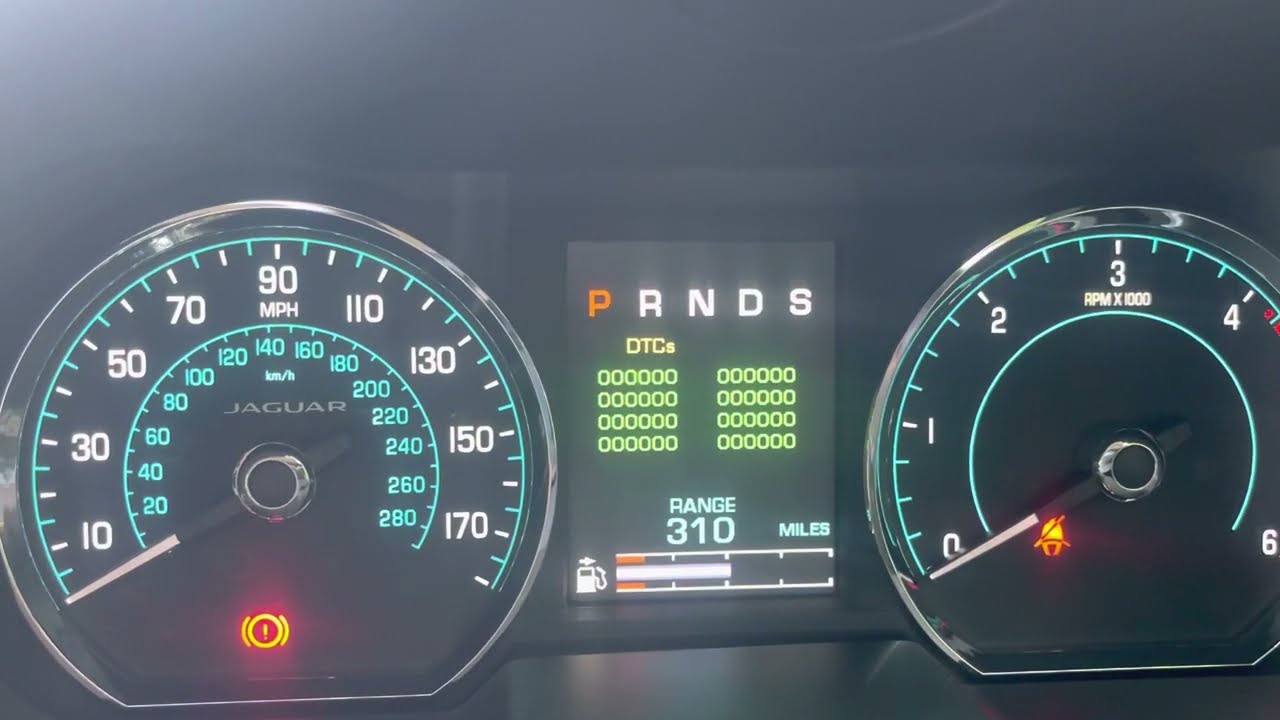
- A scan of every module, not just the engine, with the codes recorded before anything is cleared.
- Freeze-frame data. The conditions at the moment the fault was stored: engine temperature, load, road speed, throttle position. It tells you whether the fault happens cold, under load, or at motorway speed.
- Live data. Watching the relevant values while the engine runs, and while the car is driven, to see the fault happen rather than infer it.
- Actuator tests. Commanding a component to operate on demand, which separates "this part is dead" from "this part is never being asked to work".
- Physical checks. Wiring, connectors, earths, vacuum leaks, mechanical condition. A surprising share of electrical faults are a corroded pin or a chafed wire, and no amount of software finds those.
- A road test, where the fault only appears on the move.
That sequence is the work. It is why a diagnostic takes workshop time and is charged for — and why a thorough one is cheaper than two wrong parts.
Intermittent faults are the honest hard case
A fault that appears once a fortnight cannot be fixed by a tool that is only connected while the car sits in a workshop. Here the job becomes stored freeze-frame data, logging over time, and sometimes asking you to note exactly when it happens. Any garage promising a certain answer on an intermittent fault in half an hour is guessing.
The MOT reason not to ignore the light
There is a practical deadline on this. Since the 2018 changes to the MOT inspection manual, an engine malfunction indicator lamp that is showing a malfunction is a major defect — which means a failure. An engine light you have learned to live with will stop the car passing its test, so it is better dealt with before the MOT than discovered during it. Our guide to the MOT rules covers how testing and retests work, and MOT testing is carried out on site here.
What helps us, and you
The more precisely you can describe the fault, the less time is spent reproducing it:
- when it happens — from cold, when warm, under acceleration, at a steady speed;
- whether it is getting more frequent;
- what else happens at the same time: a noise, a smell, a message, the fans running;
- any recent work on the car, including anything fitted by someone else;
- whether the light stays on, or comes and goes.
If a light has just come on and you are deciding whether to drive, what to do when your check engine light comes on is the place to start.
Mitsiland's vehicle diagnostics service covers Land Rover, Jaguar, Audi, Porsche, Bentley and Mitsubishi from our workshop at Tameside Business Park in Denton, Manchester. Call 0161 320 7788 and tell us what the car is doing.