


A check engine light means your car's computer has logged a fault. What a steady or flashing light means, what to check, and when to stop driving.
That amber engine symbol is one of the most searched warning lights for good reason: it can mean anything from a minor sensor fault to a problem that will damage the engine if you keep driving. The key is knowing which situation you're in.
What the check engine light actually means
The check engine light, also called the engine management light or malfunction indicator lamp (MIL), is part of your car's on-board diagnostics. When the engine control unit detects a problem with the engine, emissions system or, on some cars, the gearbox, it stores a fault code and switches the light on.
The light doesn't tell you what's wrong. It tells you a fault has been recorded, and that code needs to be read and interpreted.
Steady or flashing: the first thing to check
- Steady light. A fault has been logged, but it isn't usually an emergency. If the car drives normally, you can generally continue your journey carefully and get it checked soon.
- Flashing light. This usually signals a serious misfire. Unburnt fuel can overheat and destroy the catalytic converter within a short distance. Ease off, stop somewhere safe and avoid driving further than you have to.
Amber is a warning. A red light, such as oil pressure, coolant temperature or a battery/charging warning, means stop as soon as it's safe and switch off.
What to check before you call a garage
- How is the car driving? Loss of power, a sudden lack of response (often called limp mode), rough running, shaking at idle or hesitation all point to a fault that needs attention quickly.
- Any smoke, smells or noises? Blue or black smoke, a smell of fuel or burning, or a new rattle are worth noting down for the technician.
- Other warning lights? A glow plug light flashing on a diesel, a DPF warning, or a gearbox message alongside the engine light helps narrow things down.
- Did you just refuel? On cars with a screw-on fuel cap, a cap that isn't fully closed can trigger an evaporative emissions fault. Check it, but don't assume that's the cause if the light stays on.
Common causes of a check engine light
- Failing ignition coils or worn spark plugs, causing a misfire
- Oxygen (lambda) or NOx sensor faults
- A faulty mass airflow sensor, or air and boost leaks
- EGR valve problems, often from carbon build-up
- A blocked diesel particulate filter (DPF), especially on cars used for short trips
- Coolant temperature sensor or thermostat faults
- Catalytic converter problems
- AdBlue system faults on newer diesels
On modern diesel Land Rover, Jaguar and Audi models in particular, emissions parts such as the DPF, EGR valve and NOx sensors are frequent causes. Many of these faults can be caught before they become expensive.
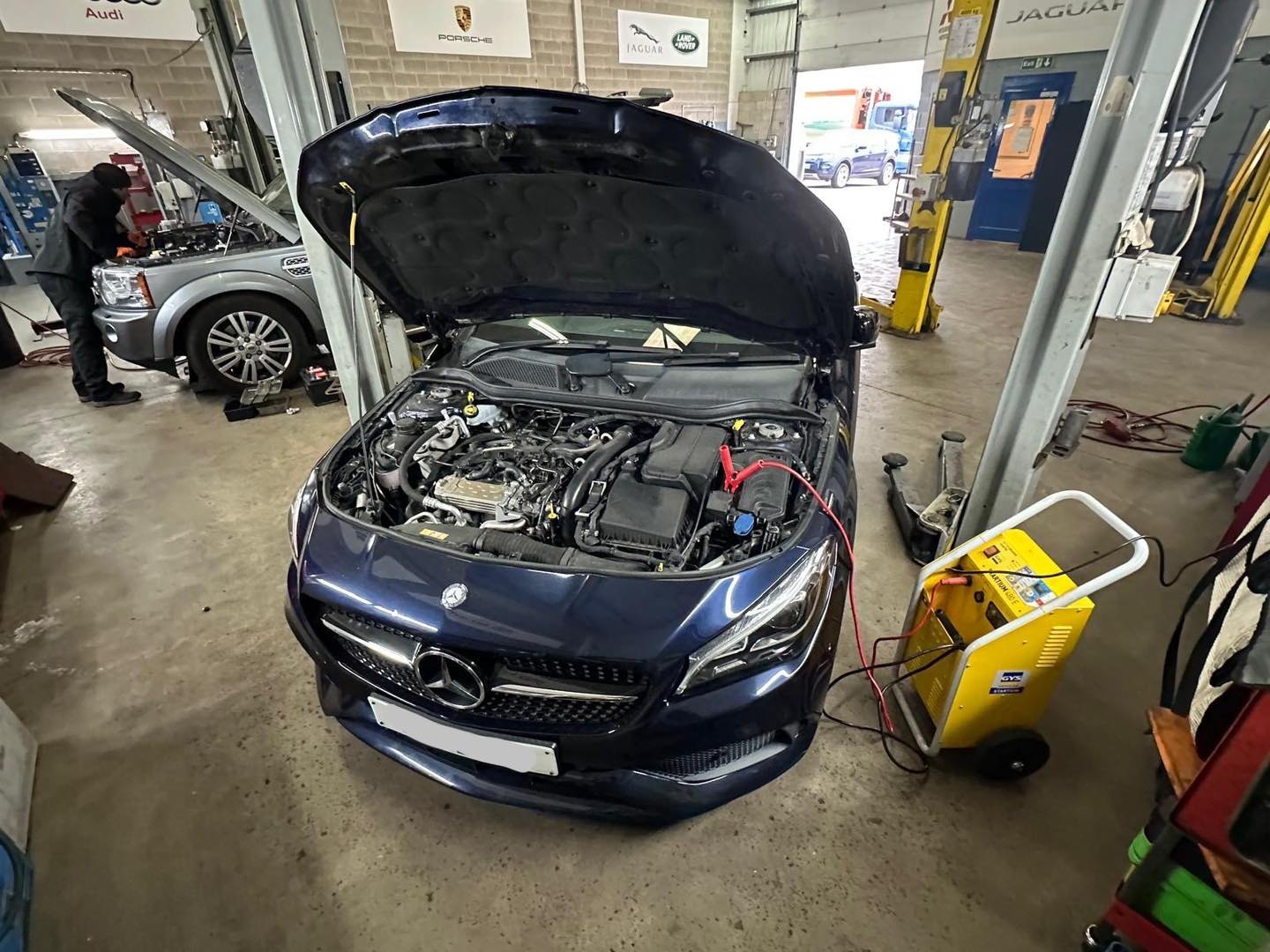
Why a cheap code reader isn't the whole answer
Plug-in code readers read generic emissions codes. They're useful, but they have limits:
- A code points to a system, not a part. A "lean mixture" code might be a sensor, or it might be an air leak the sensor is correctly reporting. Replacing the part named in the code is how people end up spending money without fixing anything.
- Manufacturer-specific faults are often invisible to generic tools, especially on premium cars with dozens of control modules.
- Clearing the code doesn't fix the fault. The light will come back, and the underlying problem may have got worse in the meantime.
A proper diagnosis reads every module, looks at live data while the engine runs, and follows a test plan to confirm the actual cause before any parts are replaced.
Can I drive with the check engine light on?
- Steady light, car driving normally: short, careful journeys are usually fine, but book a diagnostic check soon.
- Flashing light, limp mode or a red warning: don't carry on driving. Stop safely and get advice.
Will it affect my MOT?
Yes. On modern cars, an engine management light that stays on is an MOT failure. It's much better to have the fault found and fixed before the test than to have the car fail on the day. Our guide to why cars fail their MOT covers the other common reasons.
Check engine light diagnostics at Mitsiland
Mitsiland specialises in Land Rover, Range Rover, Jaguar, Audi, Porsche, Bentley and Mitsubishi, and works on most other makes too. The business was founded by Philip Hedley, a degree-qualified engineer whose background is in research and development at Bentley Motors and Jaguar Land Rover.
Our vehicle diagnostics service includes:
- a full scan of the car's control modules using dealer-level diagnostic equipment;
- live data checks and a structured test plan to confirm the cause;
- a clear explanation of what we've found, and what it will cost to put right, before any work starts;
- clearing the fault and confirming the light stays off once the repair is done.
Mitsiland is an independent specialist at Tameside Business Park, 4 Windmill Lane, Denton, Manchester M34 3QS. Call 0161 320 7788 or book online.
Frequently asked questions
Will the check engine light go off by itself?
Sometimes. If the fault was temporary, such as a fuel cap that wasn't closed, the light can go out after several journeys. If it stays on or keeps coming back, the fault is still there.
Is it safe to disconnect the battery to reset the light?
It isn't a good idea. It clears the stored information a technician needs, can reset other systems, and doesn't fix the problem, so the light usually returns.
What's the difference between the check engine light and the service light?
The service light (or a spanner symbol) is a reminder that routine maintenance is due. The check engine light means the car has detected a fault.