


Many MOT failures come down to bulbs, tyres and wipers. Why cars fail, the checks to do at home, and the rules on warning lights and diesel smoke.
A lot of MOT failures could have been avoided with ten minutes' checking at home. Other faults, such as worn suspension parts or an engine warning light, need a garage. Knowing the difference helps you arrive on test day with a car that's ready to pass.
MOT basics
- In Great Britain, a car needs its first MOT three years after it was first registered, then every year.
- You can have the MOT done up to a month (minus a day) before it runs out and keep the same renewal date.
- Cars and light vans are tested as Class 4 vehicles.
- Driving without a valid MOT is illegal, except when driving to a pre-booked test or to have MOT failure repairs done.
How MOT faults are graded
- Dangerous: the car fails and shouldn't be driven until it's repaired.
- Major: the car fails and must be repaired.
- Minor: the car passes, but the fault should be repaired soon.
- Advisory: something to keep an eye on.
The most common reasons cars fail
Across all MOT tests, the biggest causes of failure are consistently lights and signalling, suspension, brakes, tyres, and problems with the driver's view of the road. Many of these are things you can check yourself.
Checks to do before your MOT
Lights
- Headlights on dipped and main beam, sidelights, indicators and hazard lights.
- Brake lights. Ask someone to watch, or reverse up to a window or garage door.
- Rear fog light and number plate lights, which are easily forgotten.
Tyres
- The legal minimum tread depth for cars is 1.6mm across the central three-quarters of the tread, around the whole tyre.
- Look for cuts, bulges and damage to the sidewalls.
Windscreen, wipers and washers
- Chips or cracks in the area directly in front of the driver can fail the test, even small ones.
- Wiper blades should clear the screen without smearing.
- Top up the screenwash. An empty washer bottle can mean a fail.
Inside the car
- All seatbelts should latch, release and retract properly.
- The horn must work.
- Doors should open from both inside and outside, and mirrors should be secure.
Warning lights
Dashboard warning lights that stay on, including the engine management light, ABS, airbag and, on many newer cars, the tyre pressure warning, can all mean a fail. If your engine light is on, read our guide to what to do when your check engine light comes on and get it diagnosed before the test.
Number plates and the general condition
- Plates must be clean, legible and correctly formatted.
- Clear out the boot and cabin. A tester can refuse to test a car that's too dirty or cluttered to inspect.
Diesel cars: smoke and DPFs
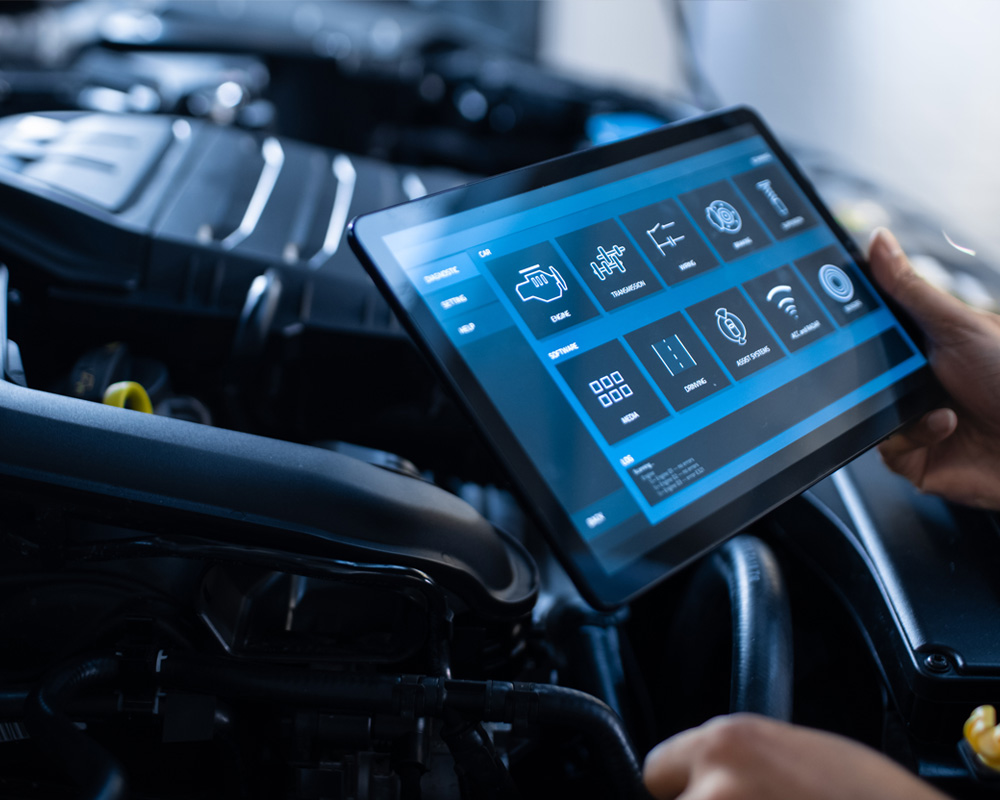
A diesel car fitted with a diesel particulate filter (DPF) will fail its MOT if it gives out visible smoke of any colour during the test. It will also fail if the DPF has been removed or tampered with. Removing a DPF is illegal for a car used on the road. If your DPF warning light is on, our engine carbon and DPF cleaning service can often restore a blocked filter.
Faults you can't easily check at home
Worn suspension bushes and joints, corroded brake pipes, exhaust leaks, emissions problems and structural corrosion all need the car on a ramp. That's where a pre-MOT check earns its keep: faults can be found and fixed before the test, instead of the car failing and coming back.
MOT testing at Mitsiland
We carry out Class 4 MOT testing on site at our Denton workshop, with DVSA-approved testers. If your car needs work, we can usually carry out the repairs in the same visit, and we'll always explain what's needed, and what it costs, before starting.
We test all makes and models, and we're specialists in Land Rover, Jaguar, Audi, Porsche, Bentley and Mitsubishi.
Mitsiland is an independent specialist at Tameside Business Park, 4 Windmill Lane, Denton, Manchester M34 3QS. Call 0161 320 7788 or book online.